The Althing Legacy

Imagine Þingvellir’s windswept plains in 930. Under open skies and shifting light, chieftains gathered to establish what would become the world’s oldest surviving parliament: the Althing. For nearly a thousand years, Iceland’s legislative heart beat far from Reykjavík, anchored in landscape and law alike.

Before construction began, the Althing’s members continued to meet at Reykjavík College on Lækjargata, while debates over the new building’s location became both practical and deeply symbolic.
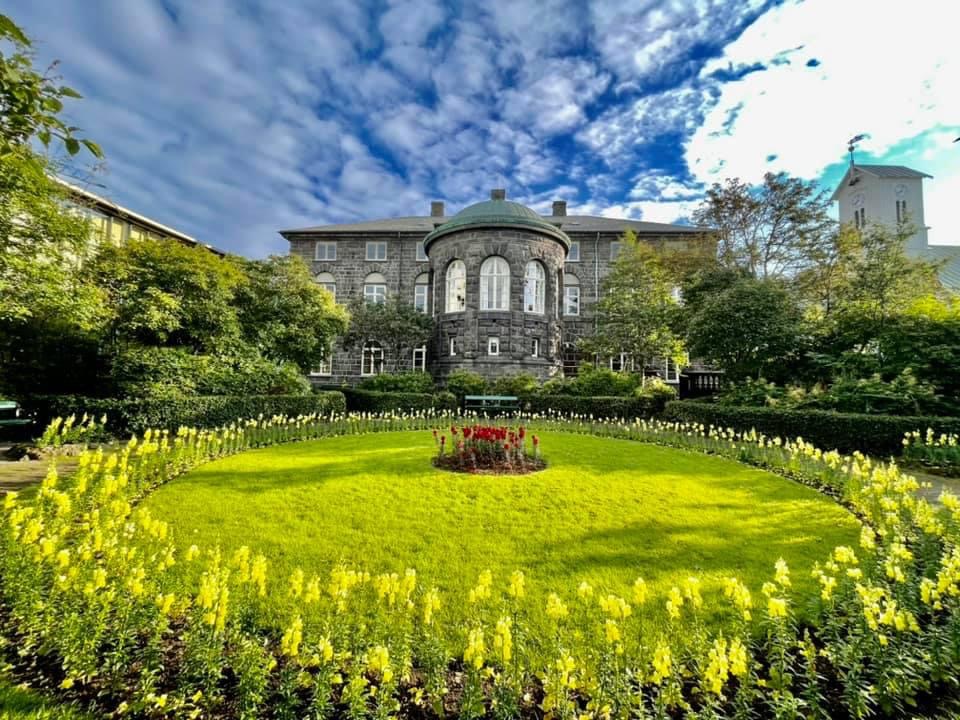
When the Althing was finally to receive a permanent stone home in the capital in 1881, its journey there proved anything but straightforward. The building would rise, but not where it was first intended. Decisions shifted, foundations failed, public outrage flared, and whispers followed the stones themselves. Even today, those whispers have not entirely faded.
Foundation Forsaken
The first chosen site was Arnarhóll, the hill long associated with Reykjavík’s earliest settlers. Stones were gathered and piled high. Workers dug deep into the earth, preparing the foundation with physical labor and civic optimism. Then, abruptly, the decision was reversed. The Althing House would not be built there.
Arnarhóll, by most measures, was ideal: elevated, centrally located, and free. The obstacle was not geological or architectural, but political. Governor Hilmar Finsen used the land to graze his cows.
The workers had no choice but to abandon their labor. The foundation pit was filled back in, and the stones already cut and waiting were left idle, destined for a yet-undetermined location.
No, not there. East to Austurvöllur.


A kale Garden for Parliament
Attention shifted east, toward Austurvöllur. Officials went door to door, attempting to purchase land suitable for the Althing House. Most homeowners refused outright. Offers were rejected regardless of price.
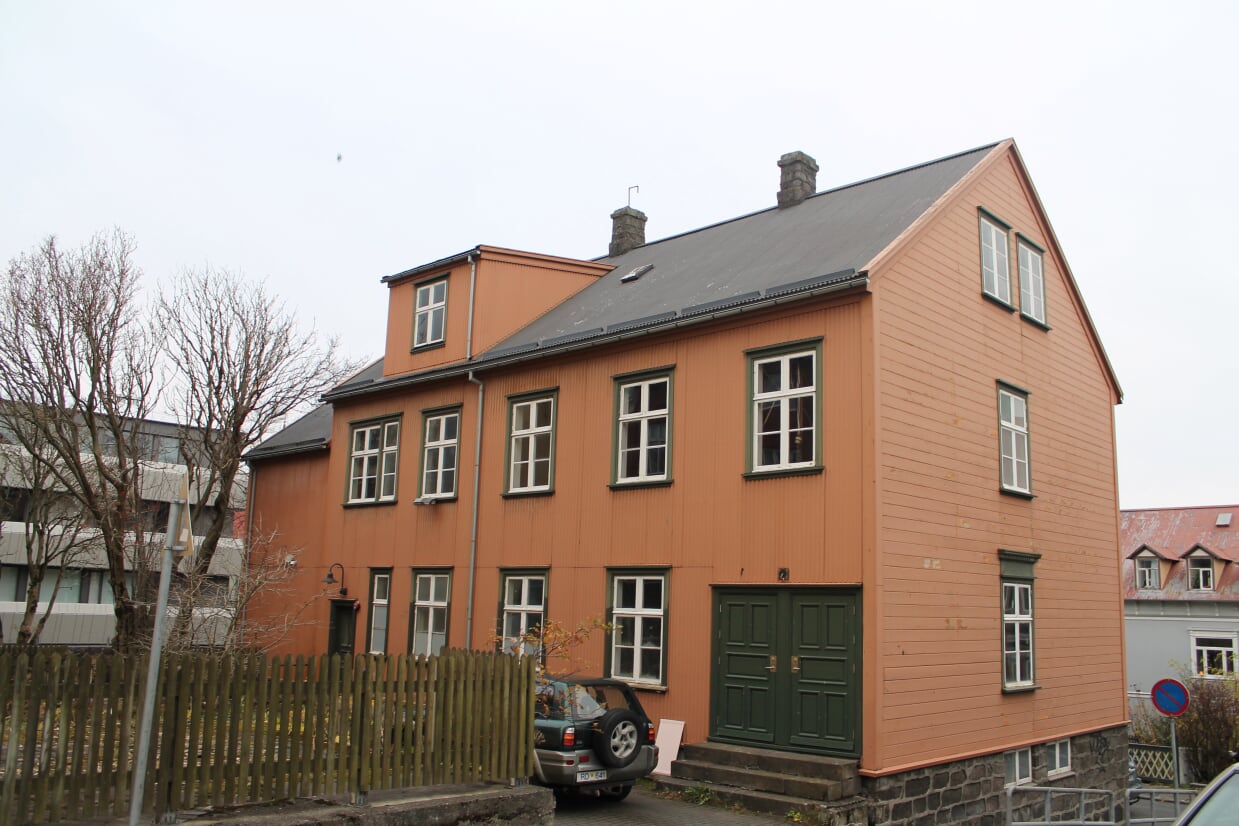
At last, Halldór Kr. Friðriksson, who lived at Kirkjustræti 12, agreed to sell his kale garden for 2,500 Icelandic krónur. What could not be taken by persuasion was secured by patience and circumstance.
The irony was not lost on the public. The Alþingi would rise not on a historic hill, but on a humble vegetable plot, while the carefully gathered stones remained unused atop Arnarhóll.


Public Outcry Ignites
The newspaper Norðlingur reacted with outrage. Its journalists questioned why public funds were spent on an expensive kale garden when Arnarhóll had been available at no cost. Worse still, the stones now had to be transported.
The criticism was relentless. The chosen site was described as “the ugliest place imaginable,” all to spare a pasture for the governor’s cattle. Editorials openly questioned the relevance of the Althing itself, arguing that real power already rested with the governor. “If only Jón Sigurðsson had lived to witness this folly,” one lamented.
Today, a statue of Ingólfur Arnarson stands atop Arnarhóll—the very site once intended for the Althing House.


Foundation Failure and Public Ridicule
Construction finally began on the south side of the former kale garden. Almost immediately, disaster struck. Digging too close to the Pond (Tjörnin) caused the foundation to flood. Work was halted, and the entire foundation had to be restarted on the north side of the property where the building stands today.
Norðlingur followed every misstep, derisively referring to the builders as the “Red Thingmen” and invoking divine intervention: “Good Jesus, help them!”
An Ambitious Architectural Vision
Once the ground was finally secured, the vision for the Althing House began to take shape, not merely as a parliament building, but as a monument to Icelandic knowledge and memory.
Despite setbacks, the vision for the building was ambitious. It was to be constructed of Icelandic stone and adorned with imagery of Iceland’s first settler, Ingólfur Arnarson.
The structure was laid out to reflect a hierarchy of purpose. The first floor was intended to house the national library, a repository for the written record of the nation. Above it, on the second floor, the Althing itself would convene, continuing a legislative tradition that stretched back to the open plains of Þingvellir. The third floor was reserved for the Antiquities Museum, placing Iceland’s material past quite literally above its lawmakers. High above it all, in a cramped and cluttered attic space, were the Althing’s meeting rooms, cramped quarters for a body tasked with governing a growing nation.

F. A. Baldt and the Ethics of Building
The responsibility for translating this ambition into stone fell to the Danish architect Ferdinand Meldahl (1827–1908), with F. Baldt as the master builder on site. Baldt was already well regarded for his skill, but his reputation in Reykjavík would soon extend beyond architecture.
Baldt paid his workers substantially more than was customary. While others earned between 1.75 and 2.00 Icelandic krónur per hour, Baldt paid 3.00. When Governor Hilmar Finsen learned of this, he objected, declaring such wages unlawful. Baldt refused to comply. He would not reduce the pay of his men, nor compromise on what he considered fair compensation for skilled labor.
In an era marked by hierarchy and restraint, Baldt’s stance set him apart. It also placed him in quiet opposition to authority, an architect insisting that the foundations of a national institution should be built not only on stone, but on equity.
Mystical Craftsmanship
During the construction of the Althing House, rumors began to circulate about the architect F. A. Baldt and his methods. It was said that he possessed knowledge of kaldabras, a form of cold welding (soldering iron without the use of fire). This technique, though real, was rare and closely guarded. During the construction, it was kept secret and known only to those who specialized in ironwork. To many of the laborers, however, such work appeared impossible by ordinary means. The prevailing belief was that kaldabras required the invocation of evil spirits, or the aid of the devil himself.
A specific recipe was said to exist, a formula used at the time of the Althing House’s construction. This knowledge was not written down and was known only to welders who practiced the method.
Tools broke frequently during the work, as was common on large construction sites. Yet each time, Baldt would leave with the damaged tools and return shortly afterward, fully repaired without a trace of fire or solder. Witnessing these uncanny restorations, some laborers came to believe that only supernatural forces, perhaps even the devil himself, could achieve such feats.
To many laborers, such work seemed impossible without supernatural assistance. Repeatedly witnessing the repaired tools and secretive methods, laborers whispered of devilish aid.

Cornerstone Commemoration
As was customary when constructing houses in Iceland, the laying of the cornerstone was not merely a technical milestone, but a symbolic one. When the time came, a message was sealed within the stone.
For the Althing House, this took the form of a silver plaque. Its inscription tied the building firmly to law, governance, and time, stating in part:
“According to the finances of Iceland for the years 1880 and 1881 and the Althing’s decree of 1879, this house is built for the Althing and the country’s galleries in the sixteenth year of the reign of Christian IX, King…”
(translation by the author)
Alongside this formal dedication, a biblical verse was engraved:
John 8:32 — “The truth shall set you free”
(Sannleikurinn mun gjöra yður frjálsa)
The contrast was striking: a building once shrouded in rumor and suspicion was now anchored, literally, by an appeal to truth.
The building itself was dedicated to Iceland’s history. The cornerstone, sealed from sight, was dedicated to democracy and respect for the nation.


The Ceremony of 1880
On June 9, 1880, the cornerstone was laid in a public ceremony. The silver plaque, along with blueprints or a model of the building, was displayed in a large tent on Austurvöllur.
Three poles were erected in the foundation. The outer poles bore the Icelandic emblem: a falcon on a blue background along with the inscriptions “With laws shall the land be built” and “Science strengthens all achievements” (“með lögum skal land byggja” and “vísindin efla alla dáð” respectively). The central pole carried the royal flag and an emblem with the name of King Christian IX.
Trumpets sounded. The crowd sang Martin Luther’s hymn A Mighty Fortress Is Our God (original: Ein’ feste Burg ist unser Gott, Icelandic: Vor guð er borg á bjargi traust). When the singing ended, Governor Finsen placed the plaque and current Danish coins into the cornerstone. A stone lid was sealed with cement.
In his speech, Finsen asked God to bless the building so long as freedom remained grounded in truth. The bishop tapped the stone three times and invoked the Holy Trinity.

Unquiet Spaces
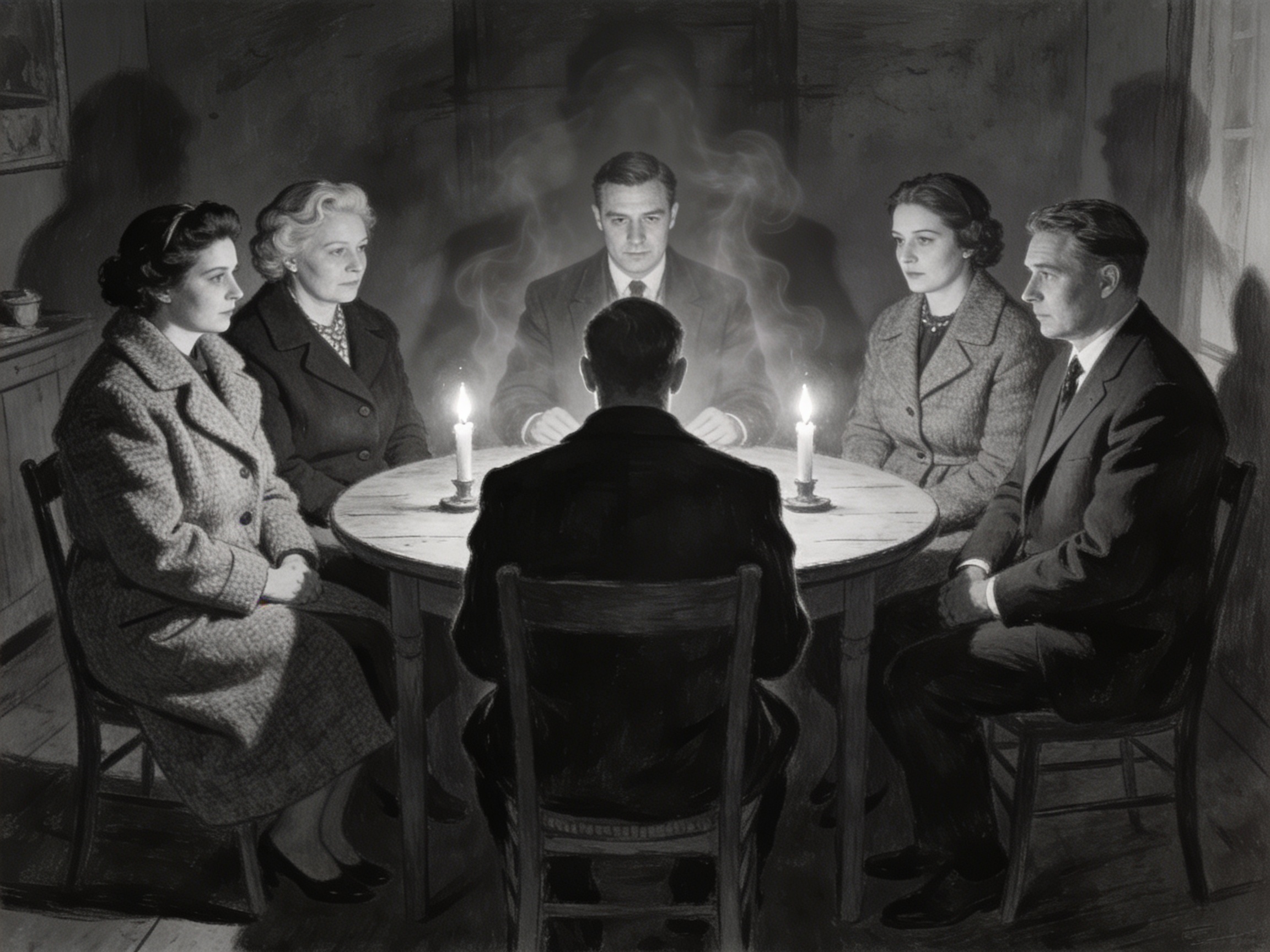
Stories of hauntings have circulated ever since. One recounts a reporter working late who ventured into the attic, where she encountered something so disturbing it was never fully described, only as a nightmare made real.
The apparition was identified as a mara, a being from Nordic folklore said to afflict sleepers, draining happiness and pressing upon the chest. The word mare shares its root with nightmare. Scholars often equated such entities with succubi or incubi.
A Sick Building?


The sculptor and clairvoyant Vagna Sólveig Vagnsdóttir has claimed that dark forces are embedded within the Althing House. She maintains that the demeanor of the þingmen changes the moment they enter, becoming heavy, darkened.
Vagna is certain a bad spirit is poisoning the minds of the thingmen. She believes as soon as the thingmen enter the building, their demeanor changes completely by becoming dark and heavy. The building is sick and the best thing to do is to remove the Althing from the building to another place altogether.
Her family history is deeply tied to Icelandic heritage. Her grandmother was the sister of Jón Sigurðsson, leader of the independence movement, whose birthday, June 17, became Iceland’s Independence Day.


Unraveling the mysteries
Why the Althing House is said to be haunted remains uncertain. Some speculate about artifacts once housed in the Antiquities Museum. Others return to Baldt’s rumored practices. Still others point to the land itself.
Maybe it has something to do with the history of this area, which has countless stories of otherworldly visitations to the likes of those at Hotel Borg.
Nearby stood Reykjavík’s oldest church and cemetery. Graves were disturbed during urban expansion, with remains scattered before reburial. Just down the street stood the city’s first hospital (1866) and medical school (1876), and Kirkjustræti 12 itself once housed medical research labs, including facilities for dissection (later used to house the Nurses Association).
Whatever the cause, the Althing House endures – solid stone, layered history, and lingering unease.
And so the world’s oldest parliament continues its work, in a building where law, memory, and mystery remain inseparably bound.


Sources: Houses on kirkjustrætiKirkjustræti 12The Althing house Reykjavík 1000 years oldConstruction of the Althing HouseConstruction of the Althing House (2)A Mighty Fortress is Our God, YouTubeJón Sigurðsson, funeralArticle on the Althing House What is a “Mara”A ghost story essay Vagna Sólveig VagnsdóttirHauntings in the Althing House Kaldabras
The explorer Leifur Eiriksson
Leifur Eiriksson statue Eirikr Thorvaldson, was famously known as Eirik the Red for his wild, red hair and beard. But
Top of the hill
Perched atop the tallest hill in Reykjavik, Skólavörðuholt is a place of intrigue and wonder. Steeped in Icelandic folklore, this
The Icelandic Horse: Legends, Myths, and
The myth, the legend and the most worshipped animal in Iceland: The Icelandic Horse The travel to a new home